 Humanis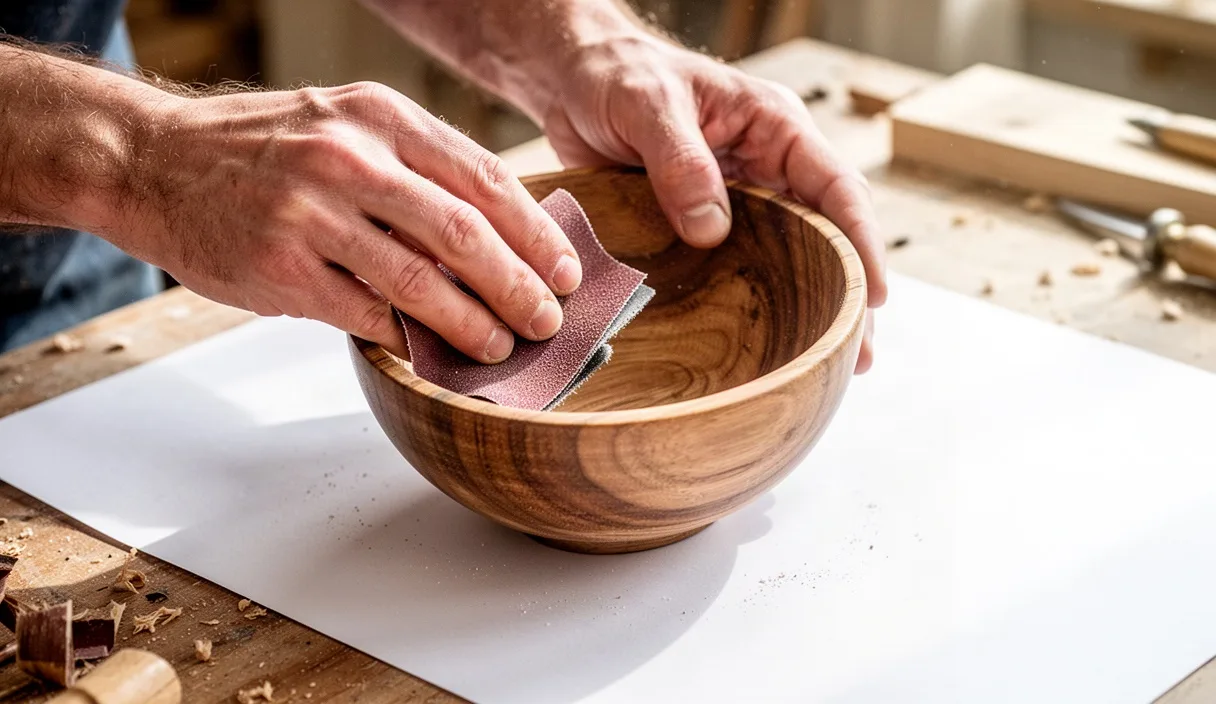
A potter friend of mine got a strange message last month: a buyer wanted to know, politely but firmly, whether her mugs were "actually thrown or just rendered to look that way." She laughed, then realized the question wasn't absurd anymore. With AI image generators producing convincing ceramics, woodwork and textiles in seconds, the line between a photograph of a real object and a synthetic image of an imagined one has gotten blurry enough that even experienced buyers pause before clicking "add to cart."
This article walks through the practical signs, on the object itself and on the screen, that separate handmade craft from AI-generated work. None of these checks are foolproof on their own, but used together they give you a reasonably confident read. We'll also cover what questions to ask a maker directly, and when, frankly, the distinction matters less than people assume.
Why This Question Keeps Coming Up
Three things collided around 2023 and 2024: image generators got good at rendering texture and light, marketplaces like Etsy and Instagram became the default storefront for independent makers, and buyers started paying premium prices specifically for the "handmade" label. That combination created an incentive, intentional or not, for some sellers to use AI-generated images as product photos, or even to sell digital renderings as if they were photographs of physical goods.
There's also a less cynical reason the question matters: many makers now use AI tools somewhere in their workflow, for sketching ideas, testing color combinations, or generating reference images, without ever claiming the finished piece is "pure" handwork. That's a different situation from outright misrepresentation, and buyers often want to know where on that spectrum a piece sits, not because AI involvement is shameful, but because it changes what they're paying for.
A 2023 survey by the Crafts Council UK found that roughly a third of craftspeople they polled had experimented with AI tools for design or marketing purposes, though far fewer used them in actual production. That gap, between design-stage AI use and finished-object AI use, is exactly what this article helps you spot.
Physical Tells in Handmade Objects
If you can hold the object or see it in person, physical evidence is your strongest guide. AI can fake a photograph, but it is currently useless for faking the object in your hand.
- Asymmetry with purpose. Hand-thrown pottery, hand-cut leather, and hand-stitched textiles almost always show small, consistent variations, a slightly thicker rim on one side, a seam that drifts a millimeter. Machine or digital production tends toward either perfect symmetry or random, purposeless irregularity.
- Tool marks that tell a story. Look for consistent striations from a specific gouge, chisel, or needle. A woodworker's chisel leaves a repeatable angle and depth across a piece; that consistency is a fingerprint of a single hand using a single tool, over and over.
- Material behavior. Real clay shrinks around 10 to 13 percent during firing, and a good potter accounts for this in their proportions. Real wood has grain that runs continuously through a carved form. These are physics constraints that an object must obey if it was actually made from the material, not just designed to resemble it.
- Weight and density. A solid wood bowl feels heavier than expected for its visual thinness; a genuine hand-forged knife has a particular balance point. These sensory details don't show up in a photo at all, which is exactly why in-person inspection remains the gold standard.
None of this means every irregularity proves authenticity. Skilled 3D printing and CNC routing can also produce objects with convincing, deliberate asymmetry. The physical tells rule out AI image fabrication specifically, but they don't rule out other forms of machine production being marketed as handmade.
Where AI Usually Enters the Process
It helps to know the specific points in a craft workflow where AI tools tend to show up, because that shapes what question you're actually asking.
| Stage | Typical AI use | Effect on "handmade" claim |
|---|---|---|
| Concept and sketching | Generating mood boards, pattern ideas, color palettes | Usually doesn't affect the claim; similar to using a magazine for inspiration |
| Pattern or design generation | AI-generated repeat patterns for textiles, laser-cut templates | Gray area; the execution is still manual but the design origin isn't |
| Marketing photography | AI-upscaled or AI-generated product images instead of real photos | Directly undermines the claim if the object shown doesn't exist as photographed |
| Full object generation | Selling AI-rendered images as finished products with no physical object | Outright misrepresentation if sold as craft |
The marketing photography row is where most real-world disputes happen. A maker might have a genuine handmade piece but use an AI tool to clean up a photo, smooth a background, or even generate a "lifestyle" shot placing the item in a room that doesn't exist. That's a different problem from the object itself being fake, and it's worth asking about separately.
Etsy updated its policies in 2023 to require sellers to disclose when listing images were created or substantially altered using AI, a rule that exists precisely because this confusion was costing buyers real money.
Digital Art: What to Look For on Screen
When the "craft" in question is itself digital, illustration, concept art, digital painting, the detection methods shift entirely, since there's no object to hold.
- Hands and small text. This is less reliable than it was two years ago, but AI image generators still occasionally produce hands with the wrong number of fingers, or background text that resembles letters without forming real words. Zoom into any signage, book spines, or jewelry in the image.
- Lighting consistency. Check whether shadows fall in a single, physically coherent direction across the whole image. AI generators sometimes render a subject with light from the left and a background shadow suggesting light from the right.
- Repetition and texture smearing. Fabric patterns, brickwork, or foliage that almost repeats but drifts strangely, or textures that look "melted" at the edges of objects, are common artifacts.
- Process evidence. A genuine digital painter can usually show layered PSD or Procreate files, timelapse recordings, or version history. This is the single most convincing form of proof, because it documents actual decision-making over time, something no current AI tool fabricates convincingly at scale.
Reverse image search is also worth doing. Tools like Google Lens or TinEye can sometimes reveal if an image matches a known AI-generated piece circulating elsewhere, or conversely, if it matches an artist's earlier portfolio post, which supports authenticity.
Questions Worth Asking a Maker
Direct conversation remains underrated. Most genuine makers are happy to talk process, and vague or evasive answers are themselves informative.
- "Can you show me a photo of the piece in progress, unedited?" A real maker typically has dozens of work-in-progress shots on their phone, often unflattering ones.
- "What tools did you use for this specific technique?" Ask about something concrete, the glaze recipe, the stitch type, the joinery method. Specific, confident answers suggest hands-on experience.
- "How long did this piece take you?" Real production times vary but follow patterns a maker knows cold. Hesitation or wildly inconsistent answers across similar items is a flag.
- "Did you use any AI tools in the design or photography?" Just asking plainly, without accusation, often gets an honest answer. Many makers who use AI for sketching or photo editing will say so readily if asked directly rather than being ambushed.
If you're buying something expensive, a custom commission over a few hundred dollars for instance, it's reasonable to ask for a short video call where the maker shows their workspace. Most legitimate small-batch makers will do this without hesitation.
When It Doesn't Actually Matter
Here's the part people don't say often enough: for a large share of purchases, the handmade-versus-AI-assisted distinction has very little practical effect on whether you'll be happy with what you bought.
If you're buying a decorative print for your wall, and it looks good, holds up at the size you need, and the price matches its quality, the generative process behind the image may simply not matter to your satisfaction. The exception is when you're specifically paying a premium for the "handmade" label itself, the story, the labor, the uniqueness, because in that case the process is the product you're buying, not just the image.
Context also matters for use. A birthday card design doesn't carry the same stakes as a wedding ring commissioned from a named jeweler whose reputation rests on actual metalwork. Scale your scrutiny to the stakes: quick casual purchases don't need an interrogation, while meaningful, expensive, or sentimental commissions deserve the questions above.
Common Mistakes
People checking for AI involvement often make a few predictable errors. First, relying only on "AI detector" websites for images, these tools have notoriously high error rates in both directions and shouldn't be treated as definitive. Second, assuming perfect symmetry always means fake, when some skilled makers (particularly in ceramics and metalwork using molds or lathes) produce genuinely handmade items with very even, regular forms. Third, confusing AI-assisted design with AI-generated production, which are meaningfully different situations with different ethical weight. Fourth, forgetting that physical inspection beats photo inspection every time, so when possible, ask to see the item in person or request a live video call rather than relying on listing photos alone.
Where to Go From Here
If you're buying, start with the cheap checks: zoom into listing photos for texture artifacts, reverse-image-search anything that looks suspiciously polished, and ask the maker one direct, friendly question about process. If you're spending real money on a commission, escalate to a video call and a request for in-progress photos before you commit.
If you're a maker, the practical move is transparency rather than purity. Disclosing AI use in design or marketing, where it exists, tends to build more trust long-term than being caught out later. Platforms are increasingly requiring this disclosure anyway, so getting ahead of it protects your reputation either way.
And if you're genuinely unsure after all of this, for a significant purchase, there's no shame in asking a third party, a local craft guild, a trusted appraiser, or even an experienced maker in the same medium, to look over the evidence with you before you spend money you'd regret losing.