 Humanis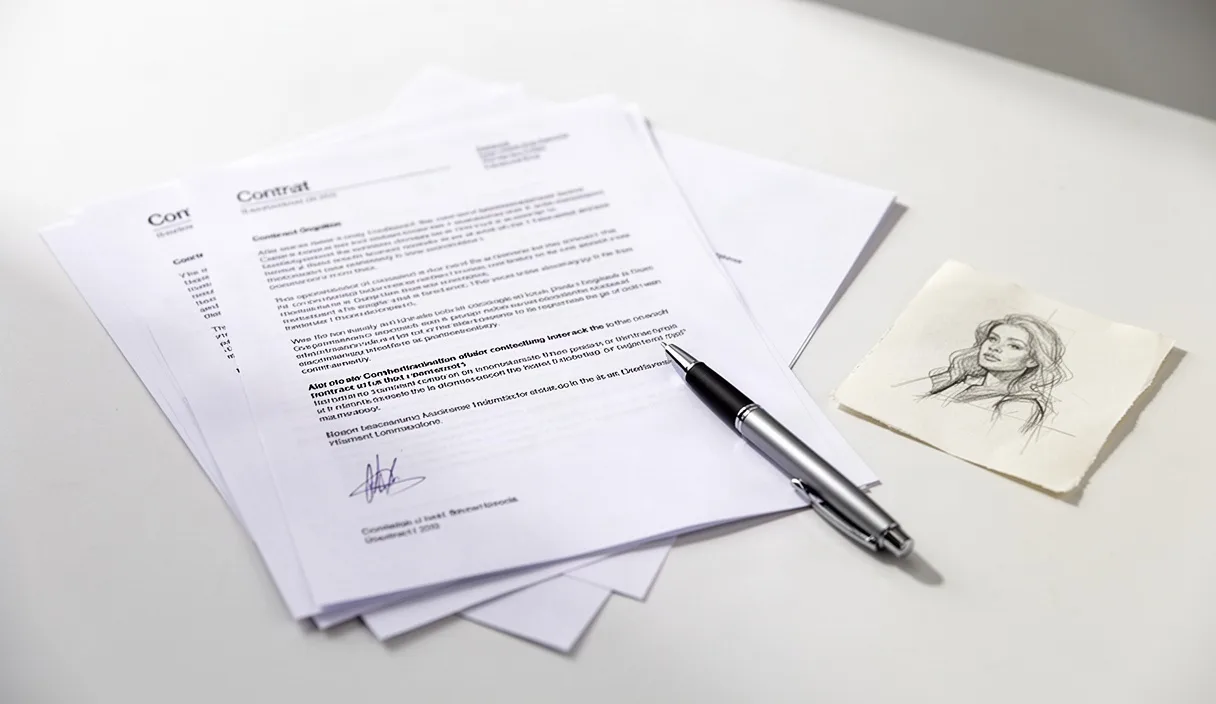
Somewhere between the first sketch and the final invoice, there is a conversation most artists dread more than scope creep: the AI conversation. Does the client expect you to use it? Do they expect you not to? Nobody wants to ask, because asking feels like admitting the question is live.
This checklist is not about whether AI belongs in commission work, that is a decision for you, your client and sometimes your contract to settle case by case. It is about making sure the two of you are picturing the same process before money changes hands. A ten-minute conversation at the start can save a week of awkward emails later.
Why This Conversation Gets Skipped
Most artists avoid bringing up AI tools for the same reason they avoid bringing up late payments: it feels confrontational before anything has gone wrong. The client hasn't complained, so why invite a complaint?
There is also a genuine confusion about what counts. A client might think "AI" means a fully generated image with no human hand involved, while you might be using an AI upscaler on a piece you drew entirely by hand, or a reference-generation tool for a pose study. Those are different enough that silence helps nobody.
Finally, many artists assume the client doesn't care, and many clients assume the artist will mention it if it matters. Both assumptions are reasonable and both are frequently wrong. A freelance illustrator who posted about this on a Discord server for commission artists said she lost a repeat client not because she used an AI tool, but because she hadn't told him she was testing one on his project. The tool use wasn't the issue. The surprise was.
Questions About Process and Tools
Before any contract language gets drafted, you and the client need a shared, specific picture of the workflow. "I don't really use AI" and "I use AI for backgrounds but not characters" are both fine answers, but vague answers cause problems months later.
- Which stages might involve AI tools? Sketching, color blocking, background generation, upscaling, inpainting touch-ups, or none at all.
- Which tools specifically? "An AI tool" covers everything from a Photoshop generative fill patch to a fully generative image model. Naming the tool (even just "Midjourney" or "Photoshop's Neural Filters") removes ambiguity.
- Is the output a starting point or a finishing touch? Using AI to rough out a pose versus using it to finalize rendered skin texture are very different levels of involvement.
- Will the client see intermediate steps? Some clients want work-in-progress shots; if those WIPs include AI-assisted stages, say so upfront rather than letting them find out from a layer panel.
One practical habit: ask the client to describe, in their own words, what they picture happening between "I pay a deposit" and "I get a final file." If their description doesn't match your actual process, that gap is exactly what this conversation is meant to close.
Questions About Ownership and Rights
This is the area where "I'll just ask my lawyer" stops being a throwaway line and starts being genuinely good advice, because copyright treatment of AI-assisted work is still unsettled in several jurisdictions and is actively being litigated and legislated as of this writing. Nothing below is legal advice, it is a list of questions worth bringing to a professional if the commission involves meaningful money or commercial use.
Still, you can ask the client some things yourself before involving anyone else:
- What will the final piece be used for? A personal desktop wallpaper carries different risk than a product label or a book cover intended for commercial sale.
- Does the client need to register copyright? In the United States, the Copyright Office has in several decisions declined to register works, or portions of works, generated primarily by AI without sufficient human authorship. If registration matters to the client, that is a reason to involve an intellectual property attorney before the commission starts, not after delivery.
- Are there platform-specific rules? Some stock art marketplaces, print-on-demand platforms and client companies have their own policies banning or restricting AI-assisted submissions, separate from copyright law entirely.
- Who owns the prompt, if prompts were used? This rarely matters for a one-off piece but can matter for ongoing series work where a distinctive prompt-and-tool combination produces a recognizable style.
If a client is commissioning art for a business, a game asset pack, or anything they intend to resell, it is worth telling them directly: "I'd recommend checking with a lawyer about how this affects your rights, especially if AI tools are part of my process." That sentence costs you nothing and protects both of you.
Questions About Revisions and Timeline
AI tools change the math on revisions in ways that are easy to undersell. A background regenerated in minutes is not the same cost, in time or energy, as a hand-painted background redone from scratch. Both the artist and client benefit from naming this upfront.
| Scenario | Question to settle before starting |
|---|---|
| AI used for early-stage composition only | Does the client get to request compositional changes after the hand-painting stage begins, or only before? |
| AI used for a background element | Is a full background swap counted as a minor revision or a major one in your revision tiers? |
| AI used for upscaling or cleanup | If the client requests a different resolution or file format later, is that included or billed separately? |
| No AI used at all | Does the client understand that revision turnaround will follow your normal hand-drawn pace, which may be slower? |
A concrete example: an artist charging 180 dollars for a half-body commission might offer two free rounds of revisions under a hand-drawn workflow, each taking two to three days. If an AI-assisted background step is involved, she might reasonably offer a third free round specifically for background swaps, since that stage takes her twenty minutes instead of two hours. Naming that difference in the quote avoids a client assuming all revisions are equally cheap and fast.
Putting It in the Contract
A verbal agreement about AI use is better than silence, but it disappears the moment either party misremembers it. If you take commissions regularly, a short clause is worth adding to your standard contract or commission terms, even a one-page one.
A workable clause does not need legal jargon. It needs three things stated plainly: what tools may be used, what happens if the client's needs around tool use change mid-project, and who is responsible for checking platform or copyright rules relevant to the final use case.
- State your default process: "I may use AI-assisted tools for [specific stages, e.g., background generation, upscaling] unless otherwise agreed in writing."
- Give the client an opt-out window: "If you require a fully hand-drawn piece with no AI-assisted stages, please state this before the deposit is paid; this may affect price and timeline."
- Clarify the limits of your responsibility: "The client is responsible for confirming that the final use of this artwork complies with any platform, competition or commercial policies regarding AI-assisted content."
Templates from sites like the Artists & Illustrators contract guides or general freelance contract generators can be adapted, but given the fast-moving legal landscape around AI and copyright, having an actual contract reviewed by a lawyer once, even a general consultation rather than a bespoke drafting job, is a reasonable investment if commissions make up a meaningful part of your income.
A Short Script for Raising It With a Client
If writing a contract clause feels like a bigger step than you're ready for, the conversation itself can be short. Here is one version that works over email or chat, adjustable to your own voice:
"Quick note before we start: my process for this piece may include [name the stage, e.g., an AI-assisted background pass / no AI tools at all]. Let me know if that works for you or if you'd prefer a different approach, it might affect price or timeline slightly."
That is it. No defensiveness, no over-explaining. Most clients will simply say "sounds good" and move on. The ones who have a strong preference, either way, will tell you now instead of at final delivery, which is the entire point.
If a client pushes back and asks pointed questions, answer them plainly rather than getting into a debate about AI art in general. "I use it for X, not Y, and here's why" is a complete answer. You don't owe anyone a philosophical position to take their commission.
Common Mistakes
- Assuming silence means consent. A client who doesn't ask about AI is not necessarily fine with any level of it.
- Bundling all AI use together. A reference generator and a full image generator are different tools with different implications; treating them as one topic confuses the conversation.
- Skipping the contract clause because the client seems easygoing. Easygoing clients can still forget verbal agreements, or the project can get passed to a manager or business partner who wasn't in the original chat.
- Giving legal guarantees you can't back up. Saying "this will definitely be copyrightable" without checking current Copyright Office guidance or consulting a lawyer can create real liability if it turns out to be wrong.
Next Steps
Write down your own answers to the process questions above before your next commission opens, not during it. A single paragraph describing your typical tool use, saved somewhere you can paste it into quotes, turns this whole checklist into a thirty-second copy-paste rather than a conversation you have to invent fresh every time.
If your commissions involve commercial use, resale, or any client who seems uncertain about copyright implications, point them toward a qualified intellectual property attorney rather than guessing together. And if you haven't looked at your contract template in the last year, this is a reasonable moment to add a short AI-use clause, even a rough one, since the rules around this are still being written in real time.